
India's exports reached a six-month high, growing by 18 per cent to USD 45.2 billion in May, driven by electronic goods, petroleum products, engineering items, and pharmaceuticals. However, the trade deficit widened to USD 28.21 billion due to a 10 per cent rise in imports, particularly petroleum products and gold, amidst surging crude oil prices.

China has emerged as India's largest trading partner in 2025-26, with bilateral trade reaching USD 151.1 billion, while India's trade deficit with Beijing widened to an all-time high of USD 112.6 billion.
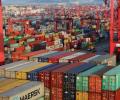
India's exports recorded a 13.78 per cent increase to USD 43.56 billion in April, marking the highest monthly outbound shipments in over four years, primarily driven by petroleum products. However, the trade deficit widened to a three-month high of USD 28.38 billion due to a 10 per cent rise in imports.
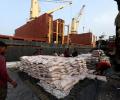
The country's exports rose 1.87 per cent to $38.5 billion in December 2025 despite global economic uncertainties, though an increase in imports led to a marginal widening of the trade deficit to $25 billion.

The country's exports rose marginally by 0.61 per cent to $36.56 billion in January, while trade deficit widened to a three-month high of $34.68 billion, government data showed on Monday.
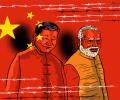
India's trade deficit with China is expected to reach $106 billion in 2025 as imports are rising faster than the country's exports to the neighbouring country, think tank GTRI said on Friday.
India's exports grew 6.74 per cent to $36.38 billion in September, while imports jumped 16.6 per cent, widening the trade deficit to $31.15 billion, the highest in over a year. The increase in inbound shipments of gold, fertiliser and silver has pushed the country's imports in September to $68.53 billion against $58.74 billion in the same month last year, official data released on Wednesday showed.
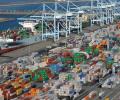
India's latest trade data reveals a significant geographical realignment, with trade surpluses growing decisively with Asian and African nations, even as surpluses with traditional partners like the US and Netherlands narrow.
The bilateral trade between India and China has been growing at a healthy rate, but the trade gap remains sharply tilted in Beijing's favour. India has time and again flagged its concern over the ballooning trade deficit and the non-trade barriers faced by Indian goods in the Chinese market.

India's merchandise trade deficit widened to a record $41.68 billion in October, as gold imports trebled and outbound shipments registered their sharpest contraction in 14 months, according to data released by the commerce department.

India's exports contracted 11.8 per cent to $34.38 billion in October, showed government data released on Monday. Imports jumped 16.63 per cent to $76.06 billion.

Gem and Jewellery Export Promotion Council says step will balance trade deficit with the US.
eclined for the third month in a row in January, falling by 2.38 per cent year-on-year to $36.43 billion, while the trade deficit widened to $22.99 billion in the month. Imports rose by 10.28 per cent year-on-year to $59.42 billion in January due to an increase gold shipments, according to the Commerce Ministry data. The trade deficit was $21.94 billion in December and $16.55 billion in January last year.

After registering a positive growth for two months, India's exports slipped into negative territory again, contracting 2.17 per cent year-on-year to $38.73 billion in May due to a fall in global petroleum prices, while trade deficit narrowed at $21.88 billion during the month.

India's exports declined for the fourth month in a row in February to $36.91 billion due to volatility in petroleum prices and global uncertainties. The country's exports stood at $41.41 billion in the same month a year ago.

Monthly gold imports have declined to 25-30 tonnes from 70-80 tonnes while recycling of old jewellery has increased following the recent hike in import duties.

Snapping the two months slide, the country's merchandise exports rose marginally by 0.5 per cent to $34.58 billion in September while trade deficit narrowed to $20.78 billion. According to official data released on Wednesday, imports increased by 1.6 per cent to $55.36 billion in September compared to $54.49 billion in the year-ago period. The trade deficit, or the gap between imports and exports, was $20.8 billion during the same month last year.

A recently finalised peace deal between the US and Iran, set to be signed on June 19, is expected to significantly benefit India's economy by boosting exports to West Asia, stabilising the rupee, and easing inflationary pressures, according to exporters and experts.

India's merchandise exports in November dipped by 4.85 per cent to $32.11 billion against $33.75 billion a year ago, according to government data released on Monday. Imports increased by 27 per cent to $69.95 billion in November compared to $55.06 billion in the year-ago month.
India's exports experienced their steepest fall in five months, declining by 7.44 per cent in March to $38.92 billion, primarily due to trade uncertainty and geopolitical tensions, with shipments to West Asia contracting by over 50 per cent.
India's exports grew marginally by 0.7 per cent to $41.97 billion in March, while the trade deficit stood at $21.54 billion in the month, the latest government data showed on Tuesday.
India's exports registered a steepest decline in 13-month falling 9.3 per cent in August to $34.71 billion due to global economic uncertainties, while the trade deficit soared to a 10-month of $29.65 billion. According to the government data released on Tuesday, imports increased by 3.3 per cent to $64.36 billion, which is a record high, due to a significant jump in the inbound shipments of gold and silver.

India has launched anti-dumping investigations into imports of thermal paper, Biaxially Oriented Polyamide (BOPA) Film, and certain antioxidants from China, following complaints from domestic manufacturers alleging material injury due to cheap imports.
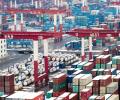
India's trade deficit with China neared $100 billion in FY25, amid escalating concerns of dumping, data released by the commerce department on Wednesday showed. Chinese imports rose by 11.5 per cent to $113.45 billion, while outbound shipments to the neighbouring country saw 14.5 per cent contraction to $14.2 billion.

India Ratings and Research predicts the Reserve Bank of India (RBI) will maintain the repo rate at 5.25 per cent throughout FY27, despite potential inflationary pressures from higher fuel prices, with inflation expected to remain within the central bank's tolerance band.

The Indian rupee plummeted to a new all-time closing low of 95.81 against the US dollar, driven by surging crude oil prices, persistent inflation concerns, and a strengthening dollar index.

India's merchandise exports rose by 9.1 per cent to $38.13 billion in May even as the trade deficit widened to a seven-month high of $23.78 billion during the month, according to government data. Healthy growth in sectors, such as engineering, electronics, pharmaceuticals, textiles and plastics helped register growth in exports despite global economic uncertainties.

'They talked bad about our leaders. They said India was a dead economy. They were not sensitive to the Indian psyche.'

Indian benchmark stock indices, Sensex and Nifty, declined for a second consecutive day, primarily due to selling pressure in IT, oil & gas, and select banking shares. Concerns over the US-Iran negotiations and a sluggish monsoon further dampened market sentiment.

Indian benchmark equity indices, Sensex and Nifty, closed lower due to investor caution over rising bond yields, a weaker rupee, and fresh fuel price hikes, which have revived inflation concerns.

India's trade deficit with Russia continued to widen for the second consecutive year to $57 billion in the financial year 2023-24 (FY24), with Moscow becoming New Delhi's largest source of crude oil imports. All eyes will now be on Prime Minister Narendra Modi's visit to Russia during July 8-9, where he is set to meet President Vladimir Putin. This will be Modi's first visit to the Kremlin since the Russia-Ukraine conflict began over two years ago.

The country's exports rose by 23.69 per cent to $34.06 billion in January on healthy performance by engineering, petroleum and gems and jewellery segments even as trade deficit widened to $17.94 billion during the month, according to provisional data of the commerce ministry. Imports in January grew by 23.74 per cent to $52.01 billion, the data, released on Tuesday, showed. Trade deficit widened to $17.94 billion during the month as against $14.49 billion in the same month last year.

India achieved a current account surplus of USD 7.1 billion, or 0.7 per cent of GDP, in the January-March quarter of 2025-26, primarily boosted by robust services exports and increased remittances from overseas Indians, according to recent Reserve Bank of India data.

The government said on Thursday the widening trade deficit is not a cause of concern as foreign exchange inflows from other sources are balancing it out.

Playing down a billion dollar trade deficit in China in the first quarter of fiscal year 2011, economists said the country would return to surplus path from April-June quarter.

Moody's Ratings has downgraded India's growth forecast for financial year 2026-27 (FY27) to 6 per cent from 6.8 per cent, attributing the revision to weaker consumption and industrial activity, elevated energy prices, and rising input costs stemming from the West Asia conflict.
After remaining in the positive zone for three months, India's exports contracted 1.2 per cent to $33.98 billion in July, while the trade deficit widened to $23.5 billion.
India's merchandise exports in April 2024 marginally rose to $34.99 billion from $34.62 billion in the year-ago month, according to government data released on Wednesday. Imports too increased to $54.09 billion from $49.06 billion in April 2023.

Chief Economic Advisor V Anantha Nageswaran stated that India's economy is projected to return to a 7 per cent-plus growth trajectory by 2027-28 (FY28), or sooner if external conditions improve, despite near-term challenges from the West Asia crisis.
The country's exports edged up 1 per cent to $38.45 billion in December 2023 while the trade deficit narrowed to a three-month low of $19.8 billion, official data released on Monday showed. Imports declined by 4.85 per cent to $58.25 billion in December last year due to a dip in crude oil shipments. The previous low in trade deficit - the difference between imports and exports - was recorded in September at $19.37 billion.
